JAW MASSAGE THERAPY
(TMJ Intra-Oral massage)
An approach combining external and intra-oral jaw massage
”A comprehensive approach to the jaw, with relaxation at the core of the session”
The session first prioritizes relaxation of the surrounding areas in order to promote a state of overall relaxation before addressing more specific work on the jaw.
Therapeutic jaw massage focuses on the release of the soft tissues of the jaw, including the muscles of mastication and the surrounding regions. This approach places strong emphasis on whole-body relaxation, which is considered an essential element before engaging in more targeted work on the jaw.
The session generally begins with massage of commonly overused areas such as the back, neck, shoulders, face, head, and upper back, in order to support a gradual and progressive relaxation of the body.
When appropriate, and always with the use of gloves in accordance with massage therapy hygiene standards, the massage therapist may then gently access the inside of the mouth to work on certain masticatory muscles that are difficult to reach through external massage alone.
This approach aims to promote a gradual release of the tissues, improved ease of movement, and an increased sense of comfort in the jaw area. Many clients report a feeling of relaxation and comfort following the session.
This treatment sequence, which integrates massage of multiple regions to support jaw relaxation, was developed and refined by Ness Elbaz, MassageKinesitherapist, based on professional experience in massage therapy.
This service is provided by a licensed massage therapist within the scope of massage therapy.
Important : Massage therapy services are not medical, dental, or physiotherapy services and are not intended to diagnose, treat, or replace care provided by regulated healthcare professionals.
Muscular Tension Associated with TMJ Disorders
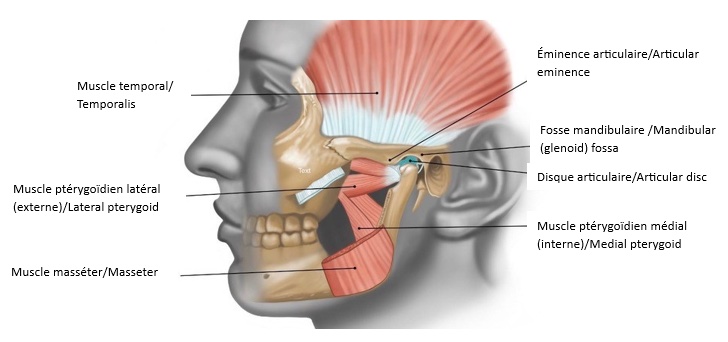
The temporomandibular joint (TMJ) is the joint that connects the jaw to the skull, located just in front of the ears. It allows the opening and closing of the mouth, as well as forward, backward, and side-to-side movements. This joint is heavily used in daily activities such as chewing, speaking, and swallowing.
When the muscles surrounding the TMJ become tense or overused, this may create discomfort and influence jaw mobility. These muscular tensions may also be felt in other areas of the body, including the face, neck, head, or upper back.
TMJ disorders may be associated with muscular tension in the jaw and surrounding regions. Some individuals experiencing TMJ-related concerns consult massage therapy to address the muscular tension that may accompany these conditions, with a focus on muscle relaxation and overall well-being.
Discomforts That May Be Associated with Muscular Tension
Some individuals seek massage therapy for discomforts such as:
- tension or discomfort in the jaw area
- facial sensitivity
- a sensation of stiffness or limited mouth opening
- headaches associated with muscular tension
- discomfort in the neck, shoulders, or upper back
- a sensation of pressure near the ears
- discomfort during chewing or following prolonged dental procedures
Some individuals with significant muscular tension in the jaw and surrounding regions also report sensations such as congestion, sounds or discomfort during jaw movements (for example: clicking, popping, or crepitus), or diffuse sensitivity in the face or teeth.
Massage therapy may help reduce muscular tension, promote relaxation, and support overall comfort.
Factors That May Contribute to Tension Around the Jaw
Muscular tension around the jaw may be influenced by various factors, including:
- clenching or grinding of the teeth (bruxism)
- certain elements related to dental occlusion (evaluation within the dental field)
- stress and muscular fatigue
- prolonged posture (computer use, phone use, precision work)
- consequences of impact or physical exertion
- certain daily habits
- sleep-related factors, including sleep apnea (evaluation within the medical field)
Stress often plays an important role: when the body is tense, the jaw muscles may contract consciously or even during sleep.
All sessions are centered on muscular massage therapy, deep relaxation, and the reduction of tension in regions associated with the jaw. Intra-oral massage is incorporated as needed, based on the client’s comfort and goals.
Important Information: This information is provided for general educational purposes only.
All services are provided by a certified massage therapist within the scope of massage therapy and are intended to promote soft-tissue release and overall well-being. Massage therapy services are not medical, dental, or physiotherapy services and are not intended to diagnose, treat, or replace care provided by regulated healthcare professionals.
Jaw Massage therapy (TMJ) sessions
Jaw Massage (TMJ) – Initial Session — 90 minutes
- Client intake form and discussion
Massage of the upper back, neck, shoulders, head and face (with myofascial stretching as needed). - Intra-oral massage.
- Facial massage with Gua Sha and jade roller
- Jade relaxation mask
Jaw Massage (TMJ) — Sessions Recommended After the Initial Session
Jaw Massage (TMJ) — Essential (60 minutes)
- Massage of the upper back, neck, shoulders, head, and face
- Intra-oral massage
- Facial massage with Gua Sha and jade roller
- Jade relaxation mask
Jaw Massage (TMJ) — Essential Plus (90 minutes) — Most Popular
- Full-body therapeutic massage (60 minutes)
- Intra-oral massage
- Facial massage with Gua Sha and jade roller
- Jade relaxation mask
Jaw Massage (TMJ) — Essential Ultimate (120 minutes)
- Full-body therapeutic massage (90 minutes)
- Intra-oral massage
- Facial massage with Gua Sha and jade roller
- Jade relaxation mask
Book us for your next:
Posted onTrustindex verifies that the original source of the review is Google. Ma séance d'aujourd'hui était 100% validé .Tanisha était vraiment douce et compréhensive à refaire . Merci .Posted onTrustindex verifies that the original source of the review is Google. Posted onTrustindex verifies that the original source of the review is Google. Des vrais professionnels ❤️ Merci, Ness CarmenPosted onTrustindex verifies that the original source of the review is Google. Amazing experience, relaxing atmosphere, highly recommend!Posted onTrustindex verifies that the original source of the review is Google. Ambiance chaleureuse et recpectueuse. Soin très personnalisé et a l'écoute de vos besoins personnelsPosted onTrustindex verifies that the original source of the review is Google. Definitely recommend, very professional Ness is a master at what he does. Non rushed service , ultra clean facility, you walk out of there 10 years younger !Posted onTrustindex verifies that the original source of the review is Google. Excellent relaxation massage. Nice clinic. Friendly staff. Will become a regular customer.Posted onTrustindex verifies that the original source of the review is Google. I had such a great experience with Ness. He took time to understand my situation and gave me a lot of informations about my issues and massage itself was great!!! Vanessa was very nice and sweet. I am looking forward to the next one!Posted onTrustindex verifies that the original source of the review is Google. Amazing staff!!Posted onTrustindex verifies that the original source of the review is Google. J’ai reçu un massage chez Wellness Privé le 22 avril dernier, et mon expérience a été excellente du début à la fin. Ness a pris le temps d’échanger avec moi avant le soin afin de comprendre mon contexte, mon niveau de stress et mes habitudes. Le massage en lui-même était remarquable : précis, adapté et très efficace. Bien que tout ne soit pas complètement réglé, je constate déjà une amélioration significative, notamment une diminution de ma prise d’advil pour mes douleurs liées au serrement de la mâchoire et aux maux de tête fréquents. Au-delà du soin, la discussion avec Ness m’a permis de repartir avec des outils concrets et de commencer à mettre en place de nouvelles habitudes. Je compte définitivement y retourner, autant pour poursuivre le travail amorcé que pour les bénéfices déjà ressentis après une seule séance.Google rating score: 5.0 of 5, based on 340 reviews